Tractor Track Systems
Tractor Track Systems
When choosing tractor tracks for a retrofit, check whether the offer includes a complete conversion system or only replacement rubber track belts. Selection depends on the tractor model, current tyre size, traction requirements, working load and soil conditions. Attached implements, axle and hub interfaces, and available mounting clearance must be reviewed before a recommendation is made.
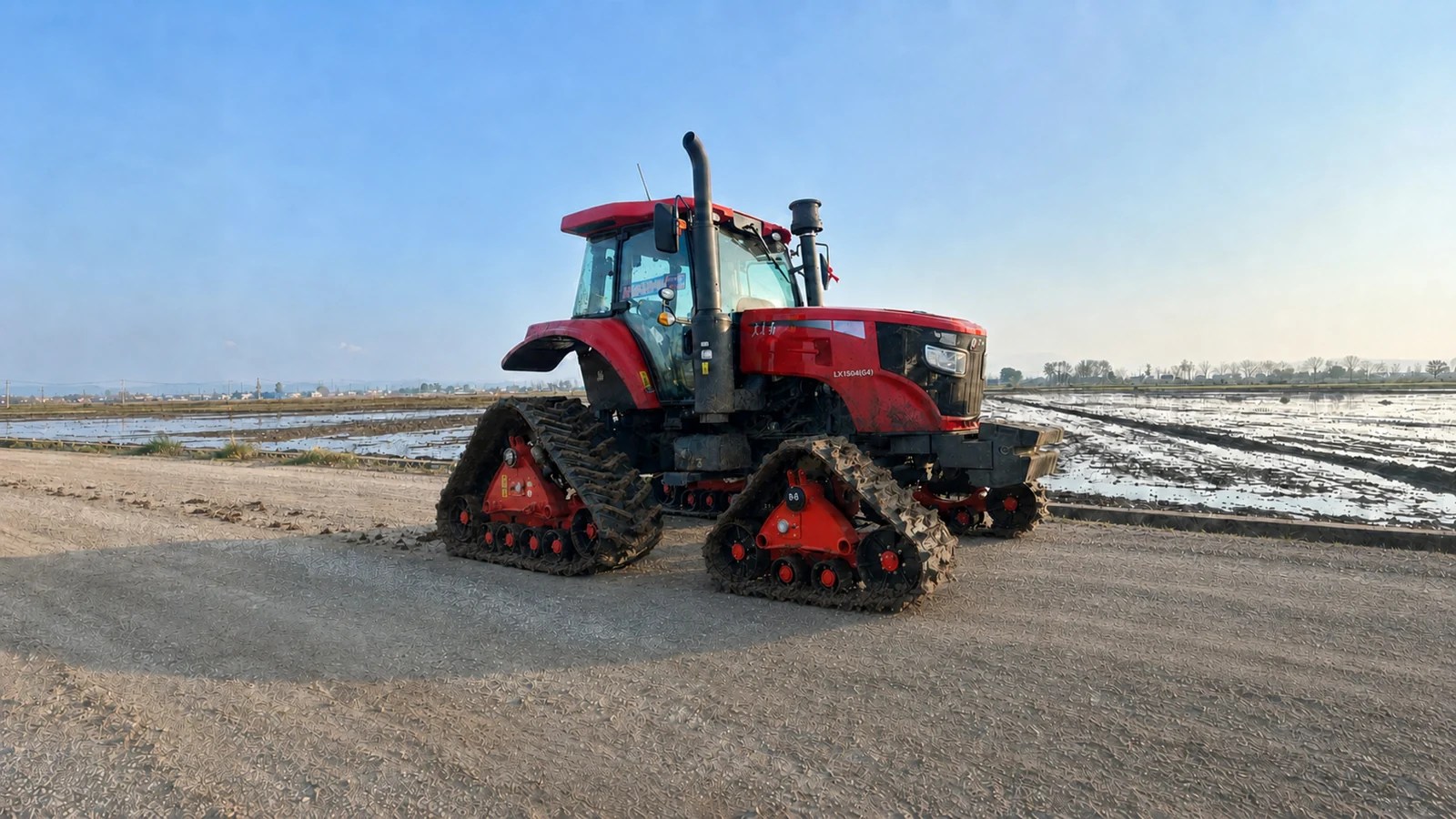
Available Models

What this video shows: Product footage for the model family listed below; the video does not establish machine compatibility or a performance rating.
Product model / family: TCS83-635 / TCS83-762
Application: Tractor Track Systems
Compatibility Reference
Machine model and Current Tire Model are starting points, not proof of fitment. Send axle and hub photos, interface dimensions, clearances, loads and working conditions. A final recommendation requires engineering review of the exact configuration.
Technical Information
The TCS83 family includes 635 mm (25 in) and 762 mm (30 in) variants. Confirm steering clearance, transport width, driveline interface and duty cycle before selection, and compare suitable tires when road travel is a major part of the work. When comparing tracks for tractors, check whether you need a complete conversion kit or replacement tractor rubber tracks for an existing system. A rear-wheel track conversion creates a half-track tractor only when the front wheels remain. The wheel positions, drive arrangement and kit supply scope require project-specific confirmation.
How to Choose
When reviewing large-frame tractor track conversions, do not assume that TCS83 is suitable from the tractor's size alone. Before comparing 25 in (635 mm) and 30 in (762 mm) track widths, confirm the exact tractor model, current tyre model, axle and hub interfaces, steering clearance, overall transport width, loads and duty cycle. Provide implement details, mounting photos and soil conditions for engineering review. Compare the actual offer scope: complete system or components, mounting parts, drawings, technical support, wear parts, maintenance and delivery arrangements. A wider track alone does not establish compatibility. Metric dimensions remain the reference values; inch equivalents are rounded for comparison. For road-transfer review, state the typical and longest single-trip distance, surface type, load condition and proportion of work spent on roads. Confirm the approved speed and duty limits for the complete converted tractor, and whether trailer transport is required for the planned route.
Track Width Is Only One Variable
A wider track can increase contact area, but width alone does not determine soil loading or field performance. Machine mass, axle load, contact length, implement load transfer, soil condition, road travel and mounting clearance must also be considered. For a rear-track conversion that retains front wheels, include any front loader or front-mounted implement, its working load, the front tyre specification and front-axle load in the review. Rear tracks alone do not confirm the suitability of the complete tractor for the intended work.
- Tractor operating mass
- Front/rear axle loading
- Implement load transfer
- Track contact length
- Working speed
- Soil moisture
- Repeated field traffic
Compare 635 mm (25 in) and 762 mm (30 in) configurations through the existing machine-specific engineering review. 762 mm (30 in) is not automatically better than 635 mm (25 in). General research findings are not Kangtui performance test results.
Ground Pressure vs Soil Compaction: What Agricultural Track Buyers Should Know
Engineering fitment review
Prepare the exact machine model and Current Tire Model, for example 30.5L-32 or 900/60R32. Photograph the complete machine, axle, hub, fasteners and areas where clearance may be limited.
Add hub and fastener dimensions, available clearances, working mass and load distribution. State the soil, slope, crop, road-travel duration and transport-width limits.
The engineering team reviews the information, requests missing data and proposes a system and mounting direction. Do not begin installation from the tire model alone; dimensions and configuration must be confirmed before production. Metric dimensions are the reference values. Inch equivalents are provided for reference and may be rounded.
Applications & Benefits
A tractor track conversion is selected according to machine model, traction demand, working load and soil conditions. The actual work, attached implements and available axle clearance all affect the recommendation.
The TCS83 family includes 635 mm (25 in) and 762 mm (30 in) variants. Confirm steering clearance, transport width, driveline interface and duty cycle before selection, and compare suitable tires when road travel is a major part of the work. When comparing tracks for tractors, check whether you need a complete conversion kit or replacement tractor rubber tracks for an existing system. A rear-wheel track conversion creates a half-track tractor only when the front wheels remain. The wheel positions, drive arrangement and kit supply scope require project-specific confirmation.
Buyer Guides & Technical Resources
Frequently Asked Questions
Is the tire model enough to confirm fitment?
No. The axle, hub, clearances, loads and intended use must also be reviewed.
What should I send for an initial review?
Send the machine model, Current Tire Model, axle and hub photos, working conditions, quantity and destination country or port.
What happens after I submit an inquiry?
The team checks the information, requests missing data and prepares a project-specific recommendation or proposal.
635 mm (25 in) vs 762 mm (30 in): how should a tractor buyer compare the two widths?
Review traction needs, soil conditions, transport width, axle loads, hub connections and mounting clearance, not track width alone. The formal TCS83 PDF lists 1,665 kg per unit for TCS83-635 and 1,755 kg per unit for TCS83-762. These weights are not permitted machine loads or proof of fitment. Submit the tractor model, current tire model and axle photos for engineering review.
Are tracks always better than flotation tires on wet ground?
No. Tracks can provide a larger ground-contact area and may improve flotation in soft conditions, but flotation tires may be more practical where road travel, cost, maintenance, turning behavior or moderate soil conditions are larger concerns. Final selection depends on machine load, tire pressure, soil condition, duty cycle and installation constraints.
What are the disadvantages of tractor track conversion?
Compare purchase and service cost, access to replacement rollers and idlers, track-tension checks and cleaning requirements. Turning may disturb soil or turf; road travel requires review of the approved machine configuration and operating guidance. Check transport width and mounting constraints before ordering. Tracks do not prevent deep sinking, and recovering a deeply stuck machine can be difficult and hazardous. Plan with the machine manufacturer or a qualified recovery provider rather than assuming more traction makes recovery safe.
Should I convert my existing tractor or buy a purpose-built tracked tractor?
For a buyer planning to convert a tractor to tracks in the UK, compare the existing tractor's condition and remaining service life with a purpose-built tracked tractor. Review validated mounting interfaces, steering and driveline requirements, warranty responsibilities, annual use, road travel and total ownership cost. Confirm delivery, installation and local service responsibilities rather than assuming UK stock or on-site fitting is included. A purpose-built tracked tractor has an integrated configuration; an aftermarket conversion requires machine-specific engineering review. Neither route is automatically the better purchase.
Request a Quote
Send your machine model, current tire model and project details for faster review.
Request a Quote